Why Do Nails Break or Peel? Causes and Care Tips
Discover why nails break or peel, common causes of brittle nails, and easy nail care tips to help protect and maintain healthier-looking nails.
Have you ever grown your nails to your favorite length, only to have one suddenly break or start peeling at the tips? You're not alone! Brittle nails, splitting, and peeling are common concerns, and everyday habits can often make them worse.
The good news is that a few simple changes to your nail-care routine can help protect your nails and improve their appearance over time. Understanding why nails break or peel is the first step toward healthier-looking hands.
Whether you prefer natural nails, gel polish, or regular manicures, this friendly guide explains the common causes of nail damage and practical ways to care for your nails.
Why Do Nails Break or Peel?
Your nails are made primarily of keratin, a protein that forms a protective structure. When the nail plate becomes weakened or repeatedly exposed to damaging conditions, it may split, crack, or separate into thin layers.
Nail peeling often occurs when the layers at the free edge separate, while nail breakage happens when the nail cracks or snaps. Both can result from several everyday factors.
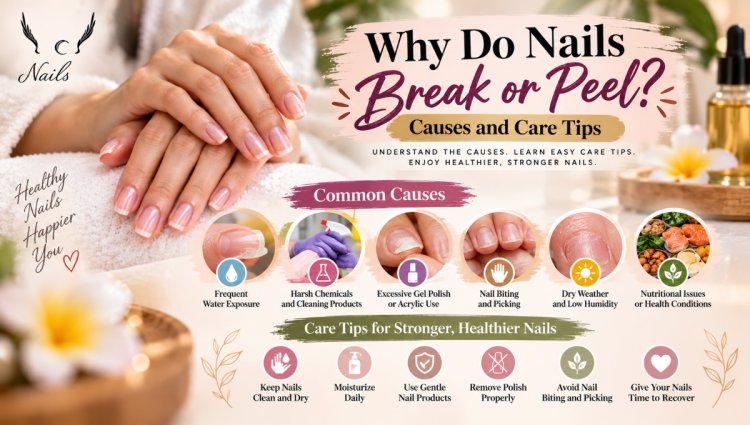
1. Frequent Exposure to Water
Repeatedly soaking your hands and allowing them to dry can make nails expand and contract. Over time, this cycle may contribute to splitting and peeling.
Washing dishes, cleaning, swimming, and frequent handwashing can all expose your nails to moisture changes.
Care tip: Wear waterproof gloves when washing dishes or using cleaning products. After washing your hands, apply hand cream and gently massage a little cuticle oil around your nails.
2. Harsh Cleaning Products and Chemicals
Detergents, solvents, and other cleaning products can strip moisture from the skin surrounding your nails. Frequent exposure may leave nails feeling dry and more vulnerable to damage.
Care tip: Protect your hands with suitable gloves when handling cleaning products. Choose gentle hand cleansers when possible and moisturize after cleaning.
3. Excessive Gel Polish or Acrylic Nail Use
Gel manicures, acrylics, and other artificial nail enhancements can contribute to nail damage, particularly when products are peeled off, removed improperly, or repeatedly applied to already weakened nails.
Aggressive filing and scraping can thin the natural nail plate, making it more likely to break.
Care tip: Never pull or peel off gel polish or artificial nails. Follow appropriate removal procedures and consider taking a break from enhancements if your nails become noticeably weak.
For more information, explore Artificial Nails and Gels: Acrylics, and Silks.
4. Nail Biting, Picking, and Using Nails as Tools
Biting your nails, picking at peeling edges, or using your fingertips to open packages can cause small cracks that grow into larger splits.
Even a healthy nail can break when it is repeatedly bent or placed under pressure.
Care tip: Keep your nails at a manageable length and use scissors or other appropriate tools instead of your nails. Trim a peeling edge carefully rather than pulling at it.
5. Dry Weather and Low Humidity
Cold weather, indoor heating, and dry air can contribute to dry skin and cuticles. When nails and surrounding skin lose moisture, they may become more prone to splitting.
Care tip: Apply a rich hand cream throughout the day, especially after washing. Use cuticle oil regularly and wear gloves outdoors in cold weather.
If you live in Colorado, these practical suggestions may be particularly useful during dry seasons. Read Nail Care Tips for Colorado's Dry Climate for more guidance from Foco Nails & Spa's website.
6. Nutritional Issues or Underlying Health Conditions
Nails can sometimes reflect changes in overall health. Inadequate nutrition, iron deficiency, thyroid conditions, and certain medical treatments may contribute to nail changes.
However, brittle nails do not automatically mean you have a vitamin deficiency. Many cases are related to environmental exposure or everyday nail-care habits.
Care tip: Eat a balanced diet that includes protein, vegetables, fruits, whole grains, and other nutrient-rich foods. Avoid starting supplements simply because your nails break; consult a healthcare professional if you suspect a deficiency or notice persistent changes.
How to Prevent Nails from Breaking or Peeling
A consistent routine can help reduce avoidable nail damage. Try these simple nail care tips to keep your nails looking neat and well-maintained.
1. Keep Nails Clean, Dry, and Gently Shaped
Trim your nails regularly and use a file to smooth rough edges. Filing gently in one direction can help avoid additional splitting.
Choose a comfortable length that suits your daily activities. Shorter nails may be easier to maintain if your nails break frequently.
2. Moisturize Nails and Cuticles Daily
Moisture is important for the skin surrounding your nails and can help improve the appearance of dry, rough cuticles.
Apply hand cream after washing your hands and use cuticle oil when needed. Consistent moisturizing is often more helpful than applying many different nail products.
3. Choose Nail Products Carefully
Some nail hardeners contain ingredients that may make nails feel stiff but can also increase brittleness with frequent use. Strong removers and aggressive filing may worsen existing damage.
Choose products that suit your nail condition, follow their directions, and stop using any product that causes irritation.
For additional guidance on polish options, read 8 Types of Nail Polish You Must Be Able to Identify.
4. Be Gentle When Removing Polish
Avoid scraping, biting, or peeling off polish. Use an appropriate remover and follow the recommended removal process for the product you're wearing.
If you regularly use gel polish, ask your nail technician how to remove it safely and how to care for your natural nails between appointments.
You can also explore Gel Manicure Tips for more information about gel nail care.
5. Give Your Nails Time to Recover
If your nails feel thin or keep peeling, consider taking a break from artificial enhancements and frequent polish removal.
Keep your nails short, moisturize them regularly, and avoid aggressive buffing while they grow out. Remember that visible improvement takes time because damaged nail plate must grow out.
Can a Professional Manicure Help with Brittle Nails?
A professional manicure can help keep nails clean, neatly shaped, and polished. A skilled technician can also discuss your preferences and help you choose a suitable cosmetic service.
However, a manicure cannot treat every cause of nail weakness. If your nails are painful, discolored, lifting from the nail bed, or persistently splitting, seek medical advice before covering the affected area with cosmetic products.
When choosing a salon, look for good hygiene practices, clear communication, and gentle nail preparation.
At Foco Nails & Spa, customers can explore different nail-care services and educational resources to make informed choices about their preferred manicure.
Learn more in 10 Reasons Why Professional Nail Care Is Important for Healthy and Beautiful Nails.
Frequently Asked Questions
1. Why do my nails peel at the tips?
Peeling at the tips can result from repeated water exposure, dry conditions, harsh products, or physical damage. Gentle filing, moisturizing, and avoiding picking at the layers may help.
2. What is the best way to strengthen brittle nails?
Keep nails at a manageable length, moisturize regularly, wear gloves during cleaning, and avoid aggressive filing or improper polish removal. Persistent brittleness may require professional medical assessment.
3. Does gel polish make nails weak?
Gel polish does not damage every person's nails, but repeated applications, aggressive filing, and peeling or improper removal can cause thinning and surface damage.
4. Which vitamins help prevent nail breakage?
Healthy nails need adequate nutrition, including protein and essential vitamins and minerals. Supplements are not necessary for everyone, and brittle nails alone do not confirm a deficiency. Ask a healthcare professional before taking supplements.
5. When should I see a doctor about peeling nails?
Seek medical advice if nail changes persist, worsen, or occur with pain, swelling, unusual discoloration, separation from the nail bed, or changes affecting multiple nails without an obvious cause.
Final Thoughts
Understanding why nails break or peel can help you make better choices for your everyday nail-care routine. Water exposure, dry conditions, harsh products, nail biting, and improper enhancement removal are common contributors.
The best approach is to protect your nails, moisturize consistently, remove polish gently, and avoid habits that cause repeated damage. With patience and a little daily care, you can support healthier-looking nails as they grow.
For professional nail-care services and more beauty tips, explore Foco Nails & Spa.
Contact Foco Nails & Spa
Company: Foco Nails & Spa
Address: 1112 Oakridge Dr #108, Fort Collins, CO 80525, USA
Phone: 970-223-5301
Email: support@foconailsandspa.com
Website: https://foconailsandspa.com/
Your nail-care journey starts with gentle habits and consistent care!
What's Your Reaction?